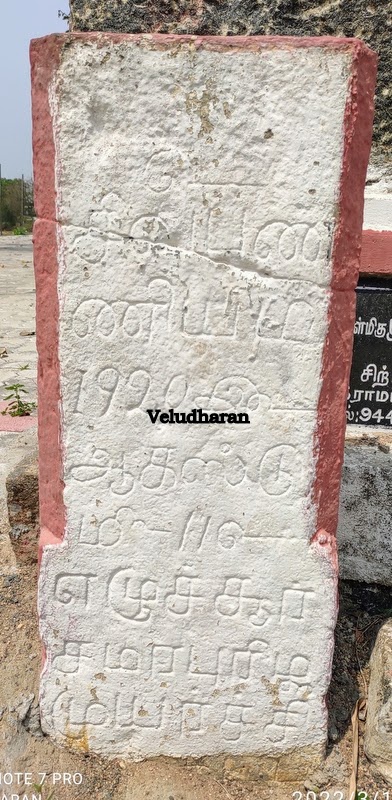
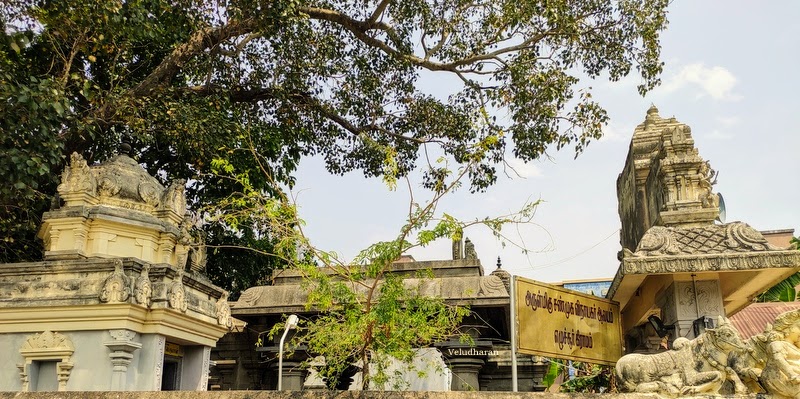
After completing the darshan of Sri Kayarohaneswarar, it was told that Thiruparuthikundram is about 3 KM from the temple. Decided to visit this temple also before returning to Chennai.

Deities : Mahavir, Pushpathanthar and Dharmadevi.
Some of the important details are..
This temple is facing east with a 3 tier Rajagopuram. Dwajasthambam, balipeedam are immediately after the Rajagopuram. Mahavir, Pushpathanthar and Dharmadevi are in the three sanctums.
In the second section sannidhis for Padma Prabhar, Vasupujya and Parshvanatha and is called as Thirikooda Pasthy. In the prakaram sannidhis for Brahma devar, Rishaba Nath, Munivasa mandapam for 5 munis, Sthala vruksham "Kuramaram" with a platform. Vanadevatha ( Nagar ) is in the north east corner of the Jinalaya. There is a sannidhi for Seethala yaksha of Brahma Devar. Sannadhi for 5 monks on the north side.
ARCHITECTURE
The jeenalayam consists of three sanctum in a row with a common artha mandapam and a muka mandapam. The maha mandapam is of 61 feet length called Sangeetha mandapam, which was used for music concerts during ustavas.
Central sanctum Vimanam ( Mahaveerar ) is of single kalasam and other two are of Gajaprishta style. The adhisthanam is of padabandha adhisthanam with jagathy, muppattai kumudam and pattigai. The prastaram is of kapotha style.
The Rishabha Devar sanctum and Shanthi mandapam are on the north prakaram abutting the wall.
திருப்பருத்திக்குன்றம்
காஞ்சிபுரம் தென்மேற்குப் பகுதியில் சிறப்புற்று விளங்கும் சமணத்தலம் 'ஜினகாஞ்சி' என அழைக்கப்பெறும் திருப்பருத்திக் குன்றமாகும். இத்தலம் கி.பி. 6-ஆம் நூற்றாண்டிலிருந்து சமண சமய முக்கியத்துவம் வாய்ந்த தலமாகத் திகழ்கிறது. பல்லவர் ஆட்சியின் போது தோற்றுவிக்கப்பட்ட மகாவீரர் கோயில் படிப்படி யாக விரிவாக்கம் பெற்று வளர்ந்திருப்பதைக் காணலாம். இக்கோயில் சோழர் காலத்திலும், விஜயநகர மன்னர்களது ஆட்சியின் போதும், அதற்குப் பின்னரும் பல்வேறு தானங்களைப் பெற்றிருக்கிறது. இது இந்தியாவிலுள்ள நான்கு 'வித்தியா ஸ்தானங்களுள்" ஒன்றாகக் கருதப்பட்டு வந்திருக்கிறது.
வர்த்தமானர் கோயில்
திருப்பருத்திக் குன்றத்திலுள்ள வர்த்தமானர் கோயில் பெரிய அளவில் பல்வேறு கருவறைகளையும், மண்டபங்களையும் கொண்டு தற்போது விளங்குகிறது. இதில் மூலவராகிய மகாவீரர், புஷ்பதந்தர் மற்றும் தருமதேவி ஆகியோருக்கும், பத்மபிரபா. வசுபூஜ்யர், பார்சுவநாதர் ஆகிய தீர்த்தங்கரர்களுக்கும் இரண்டு தொகுதிகளாகக் கருவறைகள், அர்த்தமண்டபங்கள், முகமண்டபங்கள் ஆகியவை காணப்படுகின்றன. முதற் தொகுதி கருவறைகளைக் (மகாவீரர், புஷ்பதந்தர், தருமதேவி ) கொண்ட கட்டட அமைப்பினைத் திரைலோக்கிய நாதர் கோயில் எனவும். இரண்டாவது தொகுதியினைத் 'திரிகூடபஸ்தி' எனவும் பொதுவாக அழைப்பது மரபாகும். இவை இரண்டிற்கும் பொதுவாக மகாமண்டபமும் அதனையடுத்து பலிபீடம், மானஸ்தம்பம் ஆகியவையும் காணப்படுகின்றன. இவையன்றி திருச்சுற்று மதிலை ஒட்டி பிரம்மதேவர். ரிஷபநாதர் ஆகியோரது கருவறைகளும், ஐந்து முனிவர்களுக்கெனத் தோற்றுவிக்கப்பட்ட முனிவாச மண்டபங்களும், தானியச் சேமிப்பு அறையும் உள்ளன. திருச்சுற்று மதிலின் கிழக்குப் புறத்தில் அமைந்துள்ள வாயிலில் மூன்று நிலைகளைக் கொண்ட கோபுரம் காணப்படுகிறது.
திரைலோக்கிய நாதர் கோயில்
மகாவீரர், புஷ்பதந்தர், தருமதேவி ஆகியோரது கருவறைகள் கொண்ட கட்டட அமைப்பு திரைலோக்கியநாதர் கோயில் எனப்படும். இம்மூன்று கருவறைகளுள் காலத்தால் முந்தியது, மகாவீரர் கருவறையும் அதற்கு முன்பாக உள்ள அர்த்தமண்டபமும், முகமண்டபமும். இங்கு பல்லவ மன்னனாகிய சிம்மவர்மனது ஆட்சிக் காலத்தில் (கி.பி. 556) முதன் முதலாக கோயில் கட்டப்பட்டிருக் கிறது. அப்போது மகாவீரருக்கு மட்டுமென கோயில் எழுப்பப் பட்டதால், இது வர்த்தமானீஸ்வரம் என அழைக்கப்பட்டிருக்கிறது. அக்காலத்தில் இது கருங்கல் கட்டடமாகத் திகழவில்லை. செங்கல்லால் கட்டப் பெற்றிருக்க வேண்டுமெனத் தோன்றுகிறது. காலப்போக்கில் இது பழுதுபட்டதால், முதல் குலோத்துங்க சோழன் காலத்தில் (கி.பி. 1070-1120) புதியதாகத் திருத்தியமைக்கப் பட்டிருக்கிறது.
தற்போதுள்ள கருவறை வட்டவடிவ பின் புறத்தினைக் கொண்ட தூங்கானை மாட (கஜபிருஷ்டம்) அமைப்பில் உள்ளது. இது செங்கல், சுண்ணாம்புச் சாந்து ஆகியவற்றால் கட்டப்பட்டிருக் கிறது. ஆனால் இதற்கு முன்பாக உள்ள அர்த்த மண்டபம், முக மண்டபம் ஆகியவை கருங்கல்லாலான அடித்தளத்தையும், மணற்கல்லாலான மேற்பகுதியையும் கொண்டு விளங்குகின்றன. இவை கி.பி. 11-ஆம் நூற்றாண்டுக் கலைப்பாணியில் மிளிர்கின்றன. இந்த மண்டபங்களிலுள்ள தூண்களும், கல்வெட்டுகளும் முதல் குலோத்துங்கன் காலத்தவை.
சங்கீத மண்டபம்
திரைலோக்கிய நாதர் கோயில், திரிகூடபஸ்தி ஆகியவற்றின் முகமண்டபங்களுக்கு முன்பாக பெரிய அளவில் 61 அடி நீளமுள்ள மகாமண்டபம் கட்டப்பட்டிருக்கிறது. இதனைச் சங்கீத மண்டபம் என அழைப்பது வழக்கமாகும். இதில் பல்வேறு அமைப்புகளைக் கொண்ட இருபத்தினான்கு தூண்கள் உள்ளன. இத்தூண்கள் அனைத்தும் விஜயநகரக் காலக் கலைப்பாணியில் திகழ்கின்றன. இந்த சங்கீத மண்டபத்தை இரண்டாம் புக்கன் என்னும் விஜயநகர மன்னனது அமைச்சராகிய இருகப்பா என்பவர் கி.பி. 1387 (அல்லது 1388) ஆம் ஆண்டு கட்டியதாக அறியவருகிறோம். இவரது சிற்பம் ஒன்று சங்கீத மண்டபத் தூண் ஒன்றில் செதுக்கப்பட்டிருப்பதைக் காணலாம். சங்கீத மண்டபத்தின் கூரையில் ஏராளமான ஓவியங்கள் தீட்டப் பட்டுள்ளன. கி.பி. 14-ஆம் நூற்றாண்டைச் சார்ந்த ஓவியங்களுள் பெரும் பான்மையானவை மறைந்து விட்ட போதிலும், வர்த்தமான மகாவீரருடைய வாழ்க்கை வரலாறு தொடர்புடைய சில சித்திரங்கள் மட்டும் எஞ்சியிருக்கின்றன. இவை காலம் செல்லச் செல்ல அழிந்தமையால், கி.பி. 17-ஆம் நூற்றாண்டில் நாயக்க அரசர்கள் ஆட்சிக் காலத்தில் மீண்டும் ஓவியங்கள் வரையப்பட்டிருக்கின்றன. இவ்வாறு இம் மண்டபத்தில் இரண்டு காலக் கட்டங்களைச் சார்ந்த ஓவியங்களைக் காணலாம்.
HISTORY AND INSCRIPTIONS
The Central sanctum Vimanam and other two Gajabrushta Vimana sanctums are called as Thirailokiyanathar Jinalaya and the same was built during 556 AD by Pallava King Simhavarman. The Jinalaya was maintained by the Pallavas, Chozhas and Vijayanagara Kings.
The second section sannidhis for Padma Prabha, Vasupujya and Parshvanatha and is called as Thirikooda Pasthy, are built during 12th century. This Thirikoodpasthy was also renovated by Kulothunga Chozha –III, during his 22nd year rule ( 1200 CE).
It was learnt that the Sangeeth mandapam was built by Irugappa, one of the minister in Vijayanagara Dynasty, during 1387 or 1388 CE. Irugappa joined in jainism at the end of his life, whose image is on one of the mandapam pillar.
As per the Book Kanchipuram mavatta Tholliyal kaiyedu, the original temple for Varthamana Mahavir was built by Pallava King Simhavarman ( 556 CE) with bricks. Hence called as Varthamaneeswaram. Latter this was rebuilt with stone during Kulothunga Chozha –I ( 1010 – 1120 CE ). Both the ardha mandapam and muka mandapam are also built during Kulothunga Chozha-I ( Base is with granite and above that is with sand stone ). The Rishabha Devar sanctum and Shanthi mandapam are built by Rajarajan –III ( 1234 CE ).
The mukha mandapam was built during Vijayanagara period has the life story paintings of Rishaba Nath, Mahavir and Neminath on the ceiling.
"கோலமதிட் கச்சித் திருப்பருத்திக்குன்ற
தனிற் சி(சீ)லமலி மும்முனிவர் சேர்ந்தி
ருந்த மேல்பாற் திருமேடையைத் திண்சி
லையாற் செய்தான் தருந் தமிழ்ப் பல்
லவர் கோன் தான்"
TEMPLE TIMINGS:
There is no fixed time and the poojas are taken care of by the Tamil Jain family resides opposite to the temple.
HOW TO REACH:
ThiruparuthiKundram is about 4 KM from Bus stand
Thiruparuthikundram is on the Kanchipuram to Vellore Route and the Jinalaya is about a KM from Bus Stop.
LOCATION OF THE JINALAYA :CLICK HERE
REFERENCE: A book on Jina kanchi ThiruparuthiKundram published by Jain Youth Forum and Book on Kanchipuram mavatta Tholliyal kaiyedu, Published by Tamil Nadu Archaeological Department.


---OM SHIVAYA NAMA---