Sunday, 5 July 2020

Magudeswarar Temple / Mahudeshwarar Temple / Sri Magudeshwara Temple, Kodumudi / Thirupandikodumudi, Erode District District, Tamil Nadu.

This is the 264th Paadal Petra Shiva Sthalam and 6th in Kongu Nadu on the banks of River Cauvery / Kaveri, where the river changes it’s course from North south to West – East  at this place. Since there are shrines for Lord Shiva, Vishnu and Brahma, this temple is called as Mummoorthy kshetra. Moovar has sung hymns in praise of Lord Shiva of this temple. In all the Thevara hymns, this place was mentioned as Pandikodumudi and now this place is called as Kodumudi. Moovar’s thevara hymns are as follows.....

    மற்றுப் பற்றெனக் கின்றி நின்திருப்பாத மேமனம் பாவித்தேன்

    பெற்ற லும்பிறந் தேன் இனிப்பிறவாத தன்மைவந் தெய்தினேன்

    கற்றவர்தொழு தேத்தும் சீர்க்கறையூரில் பாண்டிக் கொடுமுடி

    நற்ற வாஉனை நான்ம றக்கினும்சொல்லும்நா நமச்சி வாயவே

... சுந்தரர் தேவாரம்
    சிட்ட னைச்சிவ னைச்செழுஞ் சோதியை

    அட்ட மூர்த்தியை ஆல நிழலமர்

    பட்ட னைத்திருப்  பாண்டிக் கொடுமுடி

    நட்டனைத்தொழ நம்வினை நாசமே

... திருநாவுக்கரசு தேவாரம்

    பொண்ணமர் மேனியி னாரும் பிறைபுல்கு செஞ்சடையாரும்

    கண்ணமர் நெற்றியி னாரும் காதம ருங்குழை யாரும்

    எண்ணம ருங்குணத் தாரும் இமையவர் ஏத்தநின் றாரும்

    பண்ணமர் பாடலினாரும் பாண்டிக் கொடுமுடியாரே

... திருஞானசம்பந்தர் தேவாரம்

The sthalapurana of this temple was written by Karmega pulavar in his Kongu Mandala Sathagam.

    விரிதிரைப் பொன்னி போக வினையமுற் றினம்என்று இன்னோன்

    பரிவுறப் போது கின்றான் பாதலத்து அடைதும் என்றே

    இருநிலத்து இழிதல் காணாமுனிவரன்  ஏங்கி மாழ்கி

    பிரிவுறா வகைசெங் கையால்  பிடித்தனன் பிடிக்குள் நின்றான்

.....கொடுமுடிப் புராணம்

Moolavar  : Sri Mahudeswarar, Kodumudinathar, Malaikozhuntheesar.

Consort   : Sri Mathurabhashini, Thiripurasundari, Panmozhinayagi,                         Vadivudai Nayagi.


Some of the important features of this temple are...
The temple is facing east with a 5 tier Rajagopuram. Sakthi Vinayagar sannadhi is just opposite to the Rajagopuram. Balipedam, Dwajasthamba and Rishabam are immediately after the Rajagopuram under the recent period built mukha mandapa. The temple consists of sanctum sanctorum, antarala, arthamandapa and a mahamandapa. Dakshinamurthy is installed separately and not in the koshtam.  A small Brahma sanndhi is just behind the Ambal Temple.

In the inner prakaram, Suryan, Chandran, Uma Maheswar, Agastheswarar, Gajalakshmi, Sabhapathy, Shaniswar ( in a small shrine ), 63 var, Urchavars, Kaviri kanda Vinayagar, Sri Valli Devasena subramaniyar, Navagrahas, Bhairavar and Sandikeswara. The sthala vruksha Vanni tree is believed to be of 3000 years old. Vyakra Vinayaga keeps the leg on Tiger.

Ambal Sri Vadivudai Nayagi is in a separate temple on the south side of the temple premises  with a separate 5 tier Rajagopuram. Dwajasthambam and Balipedam are in front of mukha mandapa. Vallaba Ganapathy, Chozheswarar, Vishwesar, Kasi Viswanathar, Visalakshi, Saraswati and Palliyarai are in the inner prakara.

In between Shiva and Ambal temple, a shrine for Vishnu as Veera Narayana Perumal  with his consort Thirumangai Nachiyar ( Mahalakshmi ).  Moolavar is in the sayana posture. Alwars are in front of the sanctum sanctorum. A small 3 tier Rajagopuram is just opposite to the shrine. Balipedam and Garuda are before the sanctum sanctorum. Hanuman Sannadhi is on the south west corner of the temple premises. Thirumangai Nachiyar is in a separate sannadhi on the right side of Sri Veera Narayana Perumal.

HISTORY AND INSCRIPTIONS
It is believed that this temple built before 7th Century by Cheras and all the three Nayanmars Visited this temple and sung hymns in praise of Lord Shiva of this temple.

The inscriptions belongs to 12th Century Kerala Veera Narayanaravivarman,  13th Century Kongu Chozha, 16th Century may be Vijayanagaras, 1288 CE Kongu Pandyas, 1291 CE Kongu Pandya Sundara Pandyan  period inscriptions are found in this temple and on the banks of River Kaveri.

The inscriptions records the donations of Rice, grams, Gold, lands towards burning of perpetual lamps in the main sanctum, Naivedyam, which includes Murugam ( Ilaya Pillayar ) and Periya Thiruvadi ( Garudalwar ) shrines.   

A 16th Century inscription records the donations made by the 8 Villages out of 16 Villages of Araiya Nadu ( Nadu eddu, thanam eddu நாடு எட்டு – தானம் எட்டு  ) towards celebration of Masimaham.

The 1291 CE Kongu Pandya  Sundara Pandyan’s period inscriptions records the donation of 20 ma land as devathanam, after rectification of yeri which was breached /damaged due to flood.

The 12th Century Keralar Veeranarayanaravivarman period inscription records the gift of Unjalur ( about 5 Km from Kodumudi ) Village to this temple. Also special Naivedyam to Lord Shiva and  annathanam to be served on King’s birth day.

The 1287 CE Kongu Pandya, Sundara Pandya period inscription records the  donation of Village Vembari alias Kandiyadeva Nallur of Poonthurai Nadu  to this temple, for Masimaham celebration. And 14th year rule of the same king records the donation of  4.5 ma land  to this temple of the above village.   

LEGEND
Sage Agasthiya and Sage Bharadwaja worshiped Lord Shiva of this temple, in which Lord Shiva gave the dance dharshan without Muyalagan to Bharadwaja. Hence this place is called as Bharadwaja Kshetra. Also the sun rays falls on moolavar during 4 days in Tamil Months Panguni and Aani.

As per the sthalapurana there was a dispute of who is great between Vayu and Adiseshan. During this process Adiseshan covered the mount Meru with his hood. There were 5 precious stones, came out and fell on 5 places in the form of small hills. The Diamond felled here, Red stone / Ruby (?) at Thiruvannamalai, Maragatham / Emerald at Eengoi Malai, Manickam /Gem at Vatpokki ( Iyyar Malai ) and Neelam /sapphire at Pothigai. Hence Lord Shiva is also called as Malaikozhuntheesar.  This is a parikara sthala for Naga dosha. 

Another legend of bringing of Kaveri to Tamil Nadu, from the Agasthiyar’s Kamandala which contained Kaveri, by Vinayagar in the form of crow is also applicable to this temple. Hence Vinayagar is called as Kaveri kanda Vinayagar (

Another legend of bringing of Kaveri to Tamil Nadu, from the Agasthiyar’s Kamandala which contained Kaveri, by Vinayagar in the form of crow is also applicable to this temple. Hence Vinayagar is called as Kaveri kanda Vinayagar ( காவிரி கண்ட விநாயகர் ).  The sthala purana of Karmega Pulavar’s  Kongu mandala Sathagam also mentions the same.  

POOJAS AND CELEBRATIONS
Apart from regular poojas, Tamil New year, 11 days festival of Chitrai pournami / full moon day ( April – May ), Adi Perukku - Adi 18th day ( July – August ), New moon day, Pradosham, Maha Shivaratri, Karthigai Deepam  are celebrated in a grand manner. During festival days the procession deities are taken out for people’s dharshan.   

For Longer life people conducts Ayush Homam, Sathabhishekam, Shastiapthapoorthi in this temple.  

TEMPLE TIMINGS
The temple will be kept open between 06.00 hrs to 12.00 hrs and 16.00 hrs to 21.00 hrs.

CONTACT DETAILS :
The land line  +91 4204 222375 may be contacted for further details.

HOW TO REACH : 
The temple is about 600 meters from Bus stand and 1.0 KM from Railway station.
The Kodumudi is on the way to Karur from Erode about 41 KM from Erode, 27 KM from Karur, 120 KM from Coimbatore and 430 KM from Chennai.
The nearest railway station is Kodumudi and Railway Junction is Karur.

LOCATION :   CLICK HERE   

Ambal - Vishnu - Shiva Temple's Rajagopurams


Vishnu Sannadhi Rajagopuram
Vinayagar bas- relief on the Mandapa Pillar
Brahma Sannadhi PC- Web site
Chariot Festival PC- Web site
Sri Veeranarayana Perumal - PC- Web site
--- OM SHIVAYA NAMA---

Saturday, 4 July 2020

Sri Ardhanareeswarar Temple / Arulmigu Athanareeswarar Temple / அர்த்தநாரீஸ்வரர் கோவில் / திருச்செங்கோடு / Tiruchengode / Kodimadachengundrur, Namakkal District, Tamil Nadu.

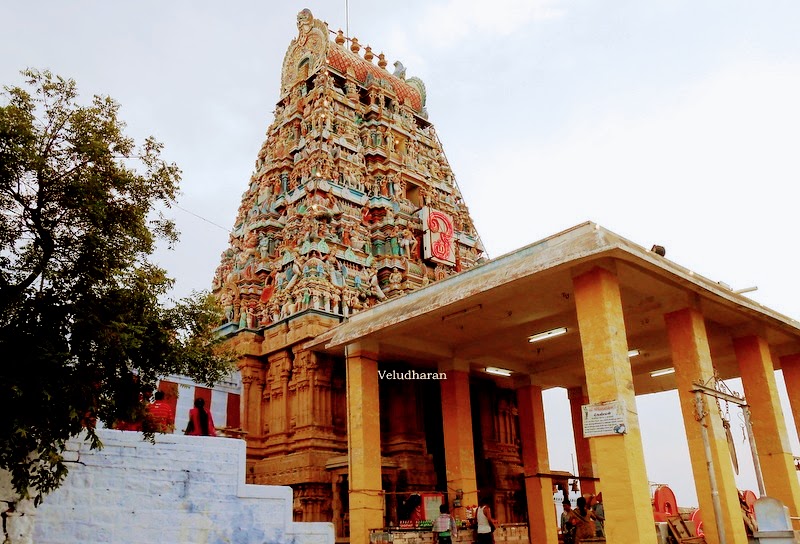
This is the 262nd Devaram Paadal Petra Shiva Sthalam  and 4th Shiva Sthalam in KONGU NADU. The details of my previous visit's post on this Sri Ardhanareeswarar temple was recorded in the same blog. The place was called as Thirukodimada Chengundrur ( கொடிமாடச்செங்குன்றூர் ) during 6th to 7th Century and now called as Tiruchengode. This is a Hill Shiva Temple where Sri Murugan is given equal importance with Lord Shiva. Thiruganasambandar has sung hymns in praise of Lord Shiva of this temple.

    வெந்தவெண் ணீறணிந்து விரிநூல் திகழ்மார்பில் நல்ல
    பந்தண வும்விரலாள் ஒருபாகம் அமர்ந்தருளிக்
    கொந்தண வும்பொழில்சூழ் கொடிமாடச் செங்குன்றூர் நின்ற
    அந்தண னைத் தொழுவார் அவலம் அறுப்பாரே
... திருஞானசம்பந்தர் தேவாரம்

The sthalapurana of this temple was written by Karmarga Pulavar in his Kongu mandala Sathagam.

    பணிமலையில் எழுந்தருளிப்
          பரைக்கொருபா கம்கொடுத்த பரிசின் தோற்றம்
    அணிமணித்தண்டு உச்சியின்மூன்று
          அங்குலியை வளைத்தமைத்த வனப்புக்கொப்பாம்
    மணிவரைமாது உமையிடத்து
          வைத்தணைத்து மகரகுழை வலத்தே நாலத்
    தணிவில் ஒளிதயங்கியதண்
          தரளமணித் தோடுஇருபால் ஆகித்தானே

... திருச்செங்கோட்டுப்புராணம்

Moolavar : Sri Arthanareeswrar
Consort   : Sri  Bagam Priyal
Murugan : Chengottu Velavar.


Some of the important features of this temple are….
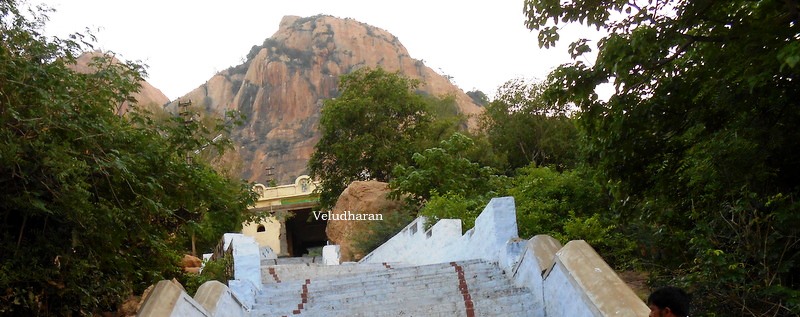
There are about 1200 steps to reach the top of the hill shrine. Steps are neatly constructed. In some places rock was cut to form steps. There are about 9 mandapams to take rest and proceed to the top of the hill constructed through various castes. At one place a there is a relief of snake  about 20 feet length  cut on the rock and devotees used to do prayer with kungkumam.

The Rajagopuram is  of 5 tiers which can be viewed from distance. Moolavar is facing west, where as Chengottu Velavar is facing east with separate Dwajasthambam, Balipeedam and Peacock vahana. The mandapam pillars are beautifully chiseled with lots and lots of relief. Entrance to the moolavar sanndhi is from east. Balipedam, Rishabam and Dwajasthambam are visible through salaram/ Jala apposite to moolavar.

Main sanctum sanctorum Dwarapalakas are female on the left and male on the right. Since moolavar is of Arthanareeswarar there is no separate Ambal Sannadhi. Moolavar is of swayambu. Gurukkal showed Shiva’s thandam on the right and Jadamudi. Shiva is  on the right &  Ambal on the right and  Swamy & Ambal Pathams ( Legs  - silambu on one leg and Kazhal on one leg ).

In the inner prakaram  sannadhi for Dakshinamurthy, Khedhara Gowri Amman, Naari Ganapathi, Golden (Thanga) Chariot Urchavar, Durgai. In the outer prakaram sannadhi for Chengottuvelavar ( Vellai pashanam, swayambu moorthi ), Kumaresar, Navagrahas, Desikar, Mukkootu Vinayagar, Nageswarar, Aathikesava Perumal, Nalleesar, Pancha Lingas, Mallikarjunar, Sangameswarar,  Selva Vinayagar, Saptamatrikas, 63 var, Vishnu Durgai, Kubera Lakshmi, Niruthi Vinayagar, Manonmani, Natarajar sabha, Kasi Viswanathar and Visalkshi, Adiseshan, Kala Bhairavar.  ( All the sannadhis are not in a sequence – scattered in the outer prakaram ).

Chengottuvelavar sannadhi is adjacent to moolavar sannadhi facing east. Arunagirinathar has sung Chengottu Velavar  in his Thirupukazh.

    அன்பாக வந்து உன்றாள்ப ணிந்து ஐம்பூத மொன்ற நினையாமல்
    அன்பால்மி குந்து நஞ்சாரு கண்க ளம்போரு கங்கள்            முலைதானும்
    கொந்தேமி குந்து வண்டாடி நின்று கொண்டாடுகின்ற குழலாரைக்
    கொண்டேநி னைந்து மன்பேது மண்டி குன்றாம லைந்து        அலைவேனோ
    மன்றாடி தந்த மைந்தாமி குந்த வம்பார் கடம்பை யனிவோனே
    வந்தேப ணிந்து நின்றார்ப வங்கள் வம்பே தொலைந்த          வடிவேலா
    சென்றேயி டங்கள் கந்தாஎ னும்பொசெஞ்சேவல் கொண்டு வரவேணும்
    செஞ்சாலி கஞ்ச மொன்றாய் வளர்ந்த செங்கோட மர்ந்த        பெருமாளே 


HISTORY AND INSCRIPTIONS
There are totally 38 inscriptions recorded at Tiruchengode. Of which 6 are considered as the earliest, belongs to Kovirajakesarivarman Adhitha Chozha-I. Rajendra Chozha-I, inscription starts with his meikeerthi ”திருமன்னிவளர.....”. There are nine inscriptions without the name of the King, but one starts with Koparakesari. In that inscription mentions Rajendra Chozha’s 18th year rule. Rajendra Chozha’s inscriptions are available from 5th to 28th Year Rule. These inscriptions mainly records the Donations made to this temple towards regular poojas, burning of perpetual lamps, Abhishekam, Naivedyam and celebration. 


The inscriptions also mentions the names of   Ekadasi Kanapperumakkal, Thiruvathirai Kanapperumakkal, Thiruvona kanapperumakkal, Thuvadasi Kanapperumakkal. These people looks after the important activities of the temple. Gold ( காசெட்டாங்கல் -  a measure ) will be offered to them and the interest will be used for feeding of Temple Brahmins on that particular Narshathra day like Thiruvonam, Thuvadisi, Ekadasi etc,. The Four inscriptions belongs to 13th Century, records that one lady Mooriamudhanar Ilangonadigal's  wife  Moori Kamakkanar donated totally 67 Kalanju gold towards feeding of Temple Brahmins, burning of Perpetual Lamps. Most of the inscriptions mentions the donation of gold towards feeding of Brahmins/ Andhanars of the temple. 


The Sadayavarman Sundara Pandyan–II ( 1283 CE ) , period 3 inscriptions are available in this temple. One of the inscription  records the name of  Ulagam Kaaththa Kannaiyan, who had done an extraordinary  act, a Hero Stone was installed ( Not in the temple but in the Mosque street ).

The 1552 CE Krishna Devaraya period  inscriptions records the appointment of officers and taxes levied. The Taxes includes 5 panam for agriculture people, Tax exempted for 2 years and from 3rd year 2 panam/ Thari – hand operated weaving machine  for the Kaikola Mudaliyars, and 1 panam for a house, totaling 3 panams ( inscription stone in Kailkolar street ).     


LEGEND
As per the legend Adisesha and Vayu fights themselves very often, due to this lot of disasters happened. To solve this the Sages gave the idea of prove themselves, who is great. Adisesha pressed the mount meru with it’s hood and Vayu has to release it by his valour. Since Vayu couldn’t release, he got angry and stopped blowing the air and ceased the air. With out air all the living things fainted. Sages and Celestial  requested Adisesha to release  his hold. As soon as Adisesha released its hood, Vayu forcefully bowed the air. Due to this Adisesha was thrown to earth in three pieces  with blood. The three places are Thiruvannamalai, Srilanka and Nagamalai also called as Tiruchengode.   

It is believed that the Prasatham of Devatheertham is distributed to the devotees which comes from the patham of moolavar. The story of Arthanareeswarar is associated with sage Brugu worshiping only Shiva, when Shiva and Parvati ( Sakthi ) are sitting together, Brugu worshiped Lord Shiva in the form of bee. Parvati thought the sage has not respected her, cursed the sage to loose his sakthi. The sage loosing his sakthi and fainted. Lord Shiva gave the sakthi with a third leg and told him Shiva cannot exists with out Sakthi. The result is the form of Arthanareeswarar. 

During Thirugnanasambandar’s visit, Tiruchengode people are infected with a decease Suram ( fever..?). He has sung the hymn starts with “ avvinaikku ivvinai- அவ்வினைக்கு இவ்வினை” and chased away the decease from that place. 

POOJAS AND CELEBRATIONS
The Golden Chariot will be pulled in the prakaram itself during important functions and prathosham days. The important functions like Vaikasi Visagam, Chitra Pournamai, Vinayagar Chathurthi, Kanda Sashti, Navaratri, Karthikai Deepam, Aruthra Dharisanam, Padithiruvizha, Masimaham, Mahashivaratri and Panguni Uthira Thiruvizha are celebrated in a grand manner.

TEMPLE TIMINGS:
The temple will be kept open 06.00 hrs to 18.00 hrs and Poojas are 08.00 hrs, 12.00 hrs and 17.00 hrs.

CONTACT DETAILS:
Temple office at base telephone number is 04288 – 255925 and Hill temple phone number is 9364229181.

HOW TO REACH:
The temple is about 3.8 KM from Tiruchengode bus Stand and 1.6 KM on foot path.
Temple bus is available from old and New Bus stand. The donation is Rs 20 to up and down. Can be utilized by those who cannot climb through steps.
Frequent buses are available from Salem, Namakkal, Erode (18 KM).
Tiruchengode is 37.9 KM from District head quarters, 18.0 KM Erode, 48.3 KM from Salem and 400 KM from Chennai
Nearest Railway Junction is Erode.  

LOCATION OF THE TEMPLE : CLICK HERE


--- OM SHIVAYA NAMA ---

Friday, 3 July 2020

Sri Sangameshwarar Temple / Sangameswarar Temple / Arulmigu Bhavani Sangameshwarar Temple, Bhavani, Erode District, Tamil Nadu.

This is the 261st  Thevara Paadal Petra Shiva sthalam and 3rd sthalam of Kongu Nadu called Thirunana in ancient times and now called as Bhavani. Thirugnanasambandar has sung hymns in praise of Lord Shiva of this temple. Arunagirinathar has sung Thirupukazh on Subramaniyar of this temple.  The temple is located at the confluence of three rivers ( Triveni Sangamam ) called Cauvery, Bhavani and Agasa Ganga / Amudha ( which comes from the under ground  ). The locals refers this temple place as Kooduthurai.  


The Sthalapurana of this temple as per Kongu Sthakangal

      பொன்னியே கங்கை யமுனையே பவானி பொருவரும் பராசரன் வகுத்த

      மின்னவிர் அமுத நதியே வானி அல்லது வேறல இந்தத்

      தன்நிகர் பிறிதுஇல் தலம் திரிவேணி சங்கமம் ஆதலால் தென்பால்

      கன்னிமா மதில்சூழ் காசியின் மேலாய்க் கவினுமிக் கடிநகர் அன்றே

( பவானித்தலபுராணம் )

The Thirugnanasambadar’s hymn on Lord Shiva of this temple goes like this.

      பந்தார் விரல்மடவாள் பாகமா

            நாகம் பூண்டு ஏறது ஏறி

      அந்தார் அரவணிந்த அம்மான்

            இடம்போலும் அந்தன் சாரல்

      வந்தார் மடம்ந்தி கூத்தாட

            வார்பொழில் வண்டு பாடச்

      செந்தேன் தெளியொளிரத் தேமாங்

            கனியுதிர்க்கும் திருநணாவே

( Uma, whose fingers are playing balls, occupies one part of Lord Shiva and he wears the snakes around his body. The place was very pleasant to make the monkeys to dance, bees flies from flower to flower with its flying sound to gather honey and the fruits ripe on its own and fell on the ground is the place Thirunana )  


Moolavar  : Sri Sangameswarar, Sri Sangameshwarar

Consort    : Sri Vedhanayagi, Pannarmozhiammai


Some of the important features of this temple are ....

Since the temple is located at the confluence of rivers Cauvery, Bhavani and Akasha Ganga /Amudha, Lord Shiva is called as Sri Sangameshwarar also known as Kooduthurai. The temple is facing east with an entrance from north side. Rishabam  is in a mandapam in front of 5 tier Rajagopuram, since the whole temple is considered as a Shiva Linga. At the entrance sannadhis are  for Kottai Vinayagar, Rajaganapathy and Muthukumarasamy. In the inner prakaram sannadhi for 63var, Panchabootha Lingas, Shani Bhagavan, Kasi Viswanathar and Arumugasamy. Bronze idols of Nayanmaras which includes Somaskanda are a part of Urchavars.


In Jurahareshwara sannadhi moolavar Jurahareshwara is with three heads, three hands and three legs is the specialty of this temple and the dwarapalakas also has the similar features.


Kubera Linga, Amirtha Lingam, Sahasra Lingam, Gayathri Linga  ( believed to be installed by saint Viswamithra ), Nagars with Jyeshta Devi, Sahasrara Linga Shrine ( 1008 Small Shiva lingas carved on one Shiva Liva Linga ) are in the outer prakara. Sri Soundaranayaki udanurai Sri Adhikesava Perumal and Yoga Narasimhar sannadhis are after the entrance of  Rajagopuram with a mandapam.


HISTORY AND INSCRIPTION

The inscriptions recorded in Erode District inscription, Volume-I, are written now and the earlier  inscriptions will be up dated latter.  As per the 17th Century inscriptions  The inscriptions belongs to 1640 CE Ketti Mudali Nalludaiappar Immudi Ketti Mudali and his wife,  1741 CE, Mysore Krishna Raja Wodayar,  16th Century Vijayanagara Krishnadevarayar, 1629 CE without  mentioning the name of the King and 1804 CE Willam Garrow, a British Collector.


During Ketti Mudali period, Prakara or the circumambulatory path, Lord Shiva’s Shrine Nirutha mandapa, Sikaram ( Vimana ?), Ambal Vedhanayaki’s shrine Sanctum Sanctorum, arthamandapa, Mahamandapam, Kumarar Temple ( Subramaniyar ?), Vasantha Mandapa, Gopura walls, Yaga Sala and Shasrara Linga ( 1008 Linga on one Linga ) are established.


The Ambal Pannar Mozhi Ammani’s  sannadhi arthamandapam was built by Immudi Ketti Mudali’s wife and the sthapathi is Narayana Achari, who is the son of  Kuruva Achari and Rangappa Achri’s brother.

During Vijayanagara period, the  ruler of this region Vaalarasa Wodayar, under Krishna Devaraya built the compound wall. This inscription is in the form of Venba Song.

            வானிகூ டல்பதிக்கு வாலரா சன்மகிழ்

            ஆன திருமதிளுண் டாக்கினான் – நாநிலமெண்

            சென்னரா சன்புதல்வன் சீமான் திருவகைந்

            தன்மரா சன்அருளால் தான்    


The Subramaniyar temple, Vahana – Peacock mandapa and the peacock was built in 1689 CE by one Kanthappan who is the grand son of Kanthappan and son of Athiyanna Pillai, belongs to Athreya Gothra.


There is a story of Ambal's  oonjal /Swing / cot made of elephant's ivory tusk. A Cot made of elephant's ivory tusk was gifted by the then British Collector of Coimbatore in 1804 CE. Since foreigners were not allowed to enter inside the temple, William Garrow, had the dharshan of Ambal through holes made on the wall opposite to Ambal’s shrine from out side. On one rainy night he was sleeping in his bungalow. He happened  to see a small girl was calling him to come out side. When he came out side,  the room collapsed immediately and found the Girl was also disappeared. He concluded that the small Girl must be none other than  Ambal. As a token of thanks giving  for saving his life, William Garrow gifted a golden cot to Ambal shrine  on 11-01-1804.  


LEGEND

This is one of the parikara sthalam for Raghu and kethu. It is believed that if one Pray Lord Shiva will get a boon, to remove marriage obstacles, Sevvai dosha, Naga dosha, Navagraha dosha,  etc. It is also believed that to get rid of Raghu and Kethu doshas, people do abhisheka to Sahasrara Linga.  


Lord Shiva gave dharshan to Kubera in the form of Swayambu Linga under the  sthala Viruksha jujuba Tree.


The unique feature of this temple is the Jurahareswarar shrine. Devotees offer Rice, Pepper Rasam and Araikeerai Kootu ( mixture of spinach & dhal ) to Jurahareswara to get relieved from fever. They also offer pepper and cummin seeds to get rid of  chronic gastric ailments and worship with bilva leaves.   


POOJAS AND CELEBRATIONS

Apart from regular poojas, 13 days car festival in the Tamil month Chithirai  ( April – May ), Adiperukku ( Tamil  month’s Aadi, 18th day – when the Mettur dam is open water in Cauvery river for the delta irrigation ), New moon days, on Eclipse days, English & Tamil New Year days, Pongal in Thai month and Deepavali are celebrated in a grand manner.


TEMPLE TIMINGS

The temple will be kept open from 06.00 hrs to 13.00 hrs and 16.30 hrs to 20.30 hrs.


CONTACT DETAILS :

The Land line and mobile numbers are 04256 230192 and 98432 48588.

Temple’s Web site : http://www.bhavanisangameswarartemple.tnhrce.in/


HOW TO REACH :

The temple is about 2.5 KM meters from Bhavani Bus Stand.

Frequent buses are available from ERODE, Perundurai, Mettur, Salem and Gobichettipalayam.

The temple is about 16 KM from Erode, 31 KM from Perundurai, 34 KM from Gobichettipalayam, 64 KM from Salem, 100 KM from Coimbatore and about 420 KM from the State Capital Chennai ( Madras )

Nearest Railway station is Erode.


LOCATION  :CLICK HERE 


Moolavar Vimanam view from Sthalaviruksham Ilanthai maram / Jujuba Tree

Temple complex view

Moolavar Vimanam view from Sthalaviruksham Ilanthai maram / Jujuba Tree

Temple complex view


North side Rajagopuram after sunset


Rajagopuram on the south side - River side

Shasrara linga Shrine

Cauvery River with bathing view 

Devotees Taking holy water from Cauvery River for Temple consecration 

Sun set  - Bhavani river

--- OM SHIVAYA NAMA---